Wet Basement London Ontario Checklist: Diagnose and Solve Moisture Issues
If you live in London, Ontario long enough, you learn the rhythm of water. Winter thaws that push slush into street drains, spring rains that soak the clay, summer storms that fill eavestroughs to the brim, and a stretch of humid August air that makes every cool surface sweat. All of that weather funnels around your foundation. Whether your home sits in Old North on heavy clay or in the newer suburbs south of the river, a dry basement takes attentive care and, when needed, decisive repair.
I have spent many damp mornings in basements across the city, squeegee in hand, walking clients through hard choices: what is a maintenance fix, what is a remodeling detail gone wrong, and where a proper repair belongs. This article gathers that experience into a practical guide. Read it with your own house in mind. A wet basement rarely has one single cause, and it never rewards delay.
What a wet basement looks like before it floods
Most problems whisper before they shout. I often see one or two small clues appear months before water finds a seam during a big storm. Efflorescence - that chalky white deposit on concrete - is more than a cosmetic blemish. It marks where mineral-laden water wicked through the wall and evaporated, leaving salts behind. Paint that flakes at the bottom third of a wall, musty odour after a rainy weekend, rusty bottom edges on the furnace cabinet, swollen MDF baseboards, or a thin tan line on a pressure-treated bottom plate all tell a similar story.
Even a finished basement telegraphs early signs if you know where to look. Walk barefoot on the carpet near exterior walls and stairs to a walkout - if it feels cool and vaguely clammy in summer, you may have chronic humidity or slab wicking. Run your hand along the rim joist where the floor framing meets the foundation; cold and damp there can drive condensation that wets the sill plate. Lift a few ceiling tiles over the laundry and check for copper pipe pinhole leaks. These small checks create a mental map you will reference if water appears suddenly during a thunderstorm.
A rapid diagnostic checklist for London homes
Use this short list after a rain or thaw to pinpoint likely sources. It is not a substitute for an inspection, but it narrows the field fast.
- Walk the exterior. Are downspouts discharging at least 2 to 3 metres from the foundation, and are eavestroughs clean and pitched properly?
- Check grading. Does soil or hardscape slope away 10 to 15 centimetres over the first 2 metres, or does it backfall toward the wall?
- Test the floor drain. Pour a bucket of water into the basement floor drain. Does it flow smoothly, gurgle, or back up?
- Inspect cracks. Note any foundation wall cracks, their length and width. Are they damp, stained, or actively weeping after rain?
- Take a humidity reading. Measure relative humidity in the basement with a simple meter. Over 60 percent in summer is a red flag for condensation and mold risk.
If you can answer these five questions precisely, you already have more actionable data than most service calls start with.
How water gets into basements here
The building science is straightforward, but local soil and weather push certain failure modes to the front.
Hydrostatic pressure builds around foundations in prolonged wet periods, especially in clay. London’s predominant glacial till holds water like a sponge. When the soil saturates, the pressure outside the wall can exceed interior air pressure by a surprising margin. That drives liquid water through porous concrete, masonry joints, and small cracks. If the weeping tile - the perimeter drain at the base of the foundation - is clogged or missing altogether in older homes, the pressure has nowhere to go except through your structure.
Capillary wicking is slower, but relentless. Concrete is a stone sponge. It can draw water upward from damp soil under the slab, bringing dissolved salts with it. That is why efflorescence appears even without visible leaks, and why vinyl plank laid directly on a slab sometimes buckles at seams.
Condensation misleads many homeowners. Warm humid summer air sinks into a cool basement and meets surfaces below the dew point. Cold copper pipes, the metal of the lally columns, uninsulated rim joists, and even the slab itself can bead moisture. People see droplets and think foundation failure, then call for basement waterproofing when the fix is a dehumidifier and insulation details.
Plumbing and fixtures add their own wild cards. Pinhole leaks in copper lines can mist for weeks, wetting joist bays and walls quietly. A washing machine standpipe can overflow if lint clogs it. A water heater relief valve that dribbles onto the floor can mimic a seep. It pays to rule these out before you cut open drywall looking for foundation cracks.
Finally, sewer backup turns a wet basement into a contaminated one. London’s mix of older combined sewers and newer separated systems means some neighbourhoods are more vulnerable during heavy storms. If wastewater comes up through the floor drain or a basement shower, do not handle it like clean water. That is a call to your plumber and likely your insurer, not a mop and a fan.
Handling the first 48 hours without making it worse
The first two days shape both the cost of repairs and the chance of hidden mold. Approach it methodically.
- Stop the inflow and make it safe. Shut off power to affected circuits if outlets got wet. If the source is a burst pipe, shut the main valve. If it is rainwater, cover any known wall crack with plastic and painter’s tape to slow the drip, then move to water management.
- Remove standing water. A small submersible pump and a wet vac can clear several centimetres of water in hours. Push water toward the floor drain with a squeegee. If the drain is slow, do not force solids into it.
- Pull up wet materials fast. Lift carpet and underpad to let the slab dry. Remove baseboards that got wet. Cut out soaked drywall 30 to 60 centimetres above the waterline. Bag and move it out of the basement. Mold growth starts in 24 to 48 hours in warm conditions.
- Dry the air and surfaces aggressively. Run a dehumidifier rated for at least 50 to 70 pints per day in an 800 to 1,200 square foot basement. Add box fans to move air across wet areas. Keep the relative humidity below 50 percent if possible.
- Document everything. Take timestamped photos and short videos. Note the weather if it was a storm event. Record moisture readings if you have a meter. Good records help with both contractor diagnosis and insurance.
I have seen homeowners save thousands by making these moves before the contractor arrives. You control mold risk and you capture details that vanish as things dry.
Distinguishing condensation from intrusion
I keep a roll of aluminum foil in the truck for a simple field test. Dry a suspect spot on the wall, tape a 30 by 30 centimetre square of foil tightly to the surface, and wait 24 hours. If moisture beads on the room side of the foil, you have condensation. If the wall side is damp when you peel it back, the wall is wetting from behind.
A hose test helps confirm exterior leakage. On a dry day, run a garden hose on the ground against the foundation, starting well above the suspected crack and moving upward in stages. Keep each spot soaking for 15 to 20 minutes. Have someone inside watch for seepage. If water appears only when the hose reaches window-well height, your culprit may be a failed well drain or poor grading, not a random wall crack.
For drains, a bucket test tells you about the floor drain performance, but dye testing or a camera inspection by a plumber gets you certainty. In older London homes, weeping tile connections may tie into the sanitary line rather than a storm line. If those connections fail, you may see cross-contamination or backups in heavy rain. This is the point where a professional pays for themselves in time saved.
London specifics that change the playbook
Soil drives much of the outcome here. The city sits on heavy clay and till. They hold water and expand, then shrink hard when they dry. This movement shows up as vertical hairline cracks that open and close with the seasons, and as diagonal step cracks in block walls where a corner of the footing settled or frost pushed.
Homes built before the mid-1970s often have clay weeping tiles. Those pipe sections clog with fine sediments over decades. If you see chronic wall dampness during long wet weather, and your downspouts and grading are in good shape, suspect a failed perimeter drain. Newer homes use perforated plastic pipe wrapped in filter fabric, which performs better if installed with the right gravel envelope.
The city has invested in sewer separation and overland flow planning, but heavy summer storms can still overwhelm local systems. A properly installed backwater valve on the sanitary line reduces the risk of wastewater backup. Some municipalities in Ontario offer subsidies for backwater valves or sump systems. Programs change over time, and eligibility depends on location and existing infrastructure, so check the City of London website or call the engineering department to confirm current support. Rely on the permit office for clarity on when a plumbing permit or inspection is required.
Finally, our freeze-thaw cycle is not kind to exterior membranes installed carelessly. I have seen DIY coatings peel after the first winter. Use systems that tolerate ground movement and backfill abrasion, and protect them with drainage board.
Inside versus outside: choosing the right waterproofing path
There is no single cure. Good basement waterproofing aligns to the failure mode, the budget, and the long view for the property.
Interior options are generally less intrusive and less expensive. For poured concrete walls with isolated cracks, low-pressure injection with epoxy or polyurethane can stop active leaks. Epoxy restores structural continuity, while polyurethane expands to fill and seal against water. In London homes with thin shrinkage cracks near window openings, this approach often works well.
Interior drainage systems - sometimes marketed as interior weeping tile - collect water at the wall-floor joint and route it to a sump. The contractor cuts the slab at the perimeter, installs perforated pipe in gravel, lays a dimpled drainage board on the wall to guide water down, then repours the slab strip. Done well, this relieves hydrostatic pressure from inside. It does not keep the wall dry from the exterior, so you will still see dampness on the wall if you remove finishes, but it manages water without digging up your landscaping.
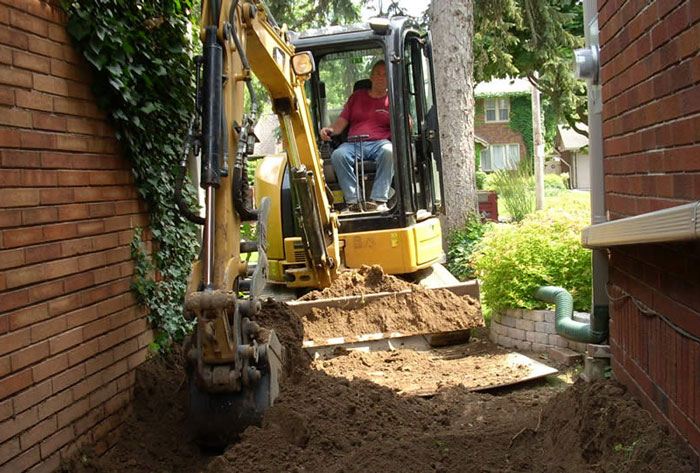
Exterior excavation and waterproofing tackle the problem at the source. Crews dig to the footing, clean the wall, seal cracks, apply a flexible waterproof membrane, and protect it with a drainage board. New perforated drain tile sits in washed gravel with filter fabric and slopes to a sump or storm connection, depending on code and site conditions. This is disruptive - plan to remove and later restore walkways, decks, and plantings - but when hydrostatic pressure is the driver, it is the most complete fix. In clay soils like ours, I prefer seeing at least 30 to 45 centimetres of washed stone around the pipe and a robust filter wrap to keep fines out.
Sumps and pumps are the beating heart of many successful systems here. A properly sized basin takes water from interior drains or exterior tile and discharges it away from the foundation. Look for cast iron primary pumps with vertical float switches and a separate battery backup pump. Power goes out during storms. A battery backup can move water for several hours to a day depending on battery size and inflow. Some homeowners ask about water-powered backup pumps that run off city water pressure. They can work, but they use a lot of potable water during an emergency and may not be permitted in every jurisdiction. Check local plumbing rules and weigh the water cost.
Costs vary widely. For context, minor crack injection might run a few hundred dollars per crack. An interior drain and sump in a typical 30 to 50 linear metre basement perimeter often lands in the several thousand to low tens of thousands of dollars, depending on concrete thickness, obstructions, and discharge routing. Full exterior excavation and waterproofing ranges higher because of labour, equipment, and restoration. Foundation repair that addresses structural movement - such as carbon fiber reinforcement on block walls or underpinning for settled footings - adds its own cost tier. Ask contractors to break proposals into line items so you see where the money goes.
If you search for basement waterproofing London Ontario or foundation repair London Ontario, you will find firms that specialize in these systems. When you interview them, listen for the way they describe cause and effect on your specific house rather than pushing a single product. A bad fit wastes money, and a good fit starts with a diagnosis that makes sense when you walk the site together.
Fixing the edges: grading, gutters, and windows that do their job
I have solved more than one “mystery leak” with a shovel and a new downspout elbow. Water management begins at the roofline and the top 2 metres of soil around your foundation.
Eavestroughs should be clean and pitched so water does not pond. Downspouts need extensions that carry water well away from the wall. Underground downspout lines often clog. If yours vanish into the grass and you cannot verify where they go, consider rerouting to above-grade extensions that discharge on a splash pad sloped away.
Grading should drop at least 10 to 15 centimetres over the first 2 metres from the wall. Avoid mulched beds right against the foundation where soil is flat or back-sloped. Decorative river rock looks tidy but can hide backfall if installed without proper shaping underneath. Keep topsoil and sod a few centimetres below the top of the foundation to prevent capillary bridging into siding or sill plates.
Window wells often cause wet walls when they fill during a storm. A proper well includes a drain at the bottom that ties to the weeping tile or a dry well, and it sits on gravel that does not clog easily. Clear leaves regularly and check that the well rim sits above finished grade to keep sheet water from pouring in. If you add covers, choose ones that still allow ventilation and can support snow.
Walkout stairwells require a drain at the landing. I have seen these discharge into the sanitary line illegally on older homes, creating a direct backup path. Have a licensed plumber verify how yours is tied in and bring it to code if needed. Permits may be required for changes, and the city inspector will tell you what applies.
Managing basement air: keeping it dry without over-drying
Even if you keep bulk water out, a London basement wants to be humid in summer. Aim for 45 to 50 percent relative humidity in warm months and 30 to 40 percent in winter to balance comfort, mold control, and wood stability.
A standalone dehumidifier is the simplest tool. Size it to the space and typical moisture load. For an 800 to 1,200 square foot basement with normal infiltration, a 50 to 70 pint per day unit does the job. Place it near the main room, set it to continuous drain into a floor drain or a condensate pump, and give it airflow. If you rely on the furnace blower to circulate air, set the fan to run on low for part of the hour rather than only on a call for heat or cooling.
Insulation details matter. The rim joist is the coldest part of the perimeter in summer and winter. Sealing it with closed-cell spray foam provides both insulation and an air barrier. If you choose foam board cut and sealed in place, add a fire protection strategy as required by code. Insulate basement walls with continuous foam against the concrete where possible, then frame and use mineral wool or fiberglass in the stud cavities. Avoid poly sheeting directly against the wall on the warm-in-summer side; it traps moisture.
Ducted ventilation can help, but do not use exhaust-only strategies that suck moist outdoor air into the basement in summer. Heat recovery ventilators are useful for air quality, not moisture removal unless designed into a whole-house plan. The goal is to control both moisture sources and indoor dew point so cold surfaces do not sweat.
Foundation repair when movement shows up
Water is not always the only enemy. If you see a horizontal crack mid-height on a block wall that bows inward, that is a structural concern. Minor bowing - often judged in centimetres - can be stabilized with carbon fiber straps epoxied to the wall and anchored at the top and bottom. Severe movement may require steel beams or exterior excavation with wall straightening and proper drainage added.
Vertical cracks in poured walls are common and often benign, especially tight hairlines near the centre of a wall. Wider cracks that change seasonally indicate movement. Step cracks in block near a corner usually point to differential settlement or frost heave. A structural contractor will measure, monitor if needed, and propose reinforcement or underpinning. True foundation repair goes beyond water management and deserves a qualified engineer’s input when the signs are significant.
If you search for foundation repair in this market, look for firms that document deflection, use recognized reinforcement systems, and will coordinate with an engineer when required. A transferable warranty with clear terms adds value when you sell.
Permits, insurance, and the paperwork that saves you later
Call your insurer as soon as you determine you have a covered loss. Policies vary, but many treat sewer backup differently than storm water intrusion. Endorsements for overland water and sewer backup are common additions in Ontario. Document conditions carefully before you start demolition, and keep receipts for drying equipment rental and disposal.
For work that changes plumbing - adding a sump pit and pump, installing a backwater valve, tying drains to storm or sanitary - expect to pull permits. Exterior excavation in a tight urban lot can trigger utility locates, fence agreements with neighbours, and temporary egress changes. Good contractors handle this routinely, but you remain the permit holder on your property, so ask to see permits posted and inspection sign-offs recorded.
The City of London has offered, at times, grant or rebate programs for flood mitigation measures. Programs evolve. Before you commit to an expensive scope, check current offerings and requirements. Some reimburse only after inspection. Others require specific equipment models or licenced installer certification. Treat this as part of your budgeting, not a bonus you hope to chase later.
Choosing and working with contractors without regret
A good contractor simplifies choices, not complicates them. When you interview basement waterproofing London Ontario companies or foundation repair London Ontario specialists, pay attention to the way they walk your house. They should start at the roofline and work down, ask about the age of the home and past work, and open access panels rather than just look at the finished walls. They should be comfortable talking through interior versus exterior trade-offs, sump discharge options, and how clay soil changes the design.
Ask for three references from jobs at least a year old. Water problems tell their truth over time. Request certificates of insurance and WSIB coverage. Read the warranty carefully. Does it cover seepage at the repaired area only, or the whole wall? Is it transferable? Be wary of pricing that ignores restoration costs. Filling a trench is not the same as restoring a landscaped side yard or a stone patio.
I suggest homeowners attend the final walkthrough with a camera and a notepad. Ask the crew lead to show you the discharge line route, the backflow preventer, the check https://israelbpcf652.lowescouponn.com/choosing-the-best-drainage-contractors-in-london-ontario-12-questions-to-ask-1 valve orientation, and the sump alarm test. Know how to maintain what you just bought.
A maintenance rhythm that keeps things dry
In my own calendar, I have four reminders tied to the seasons. Each takes less than an hour, and together they head off most surprises.
In early spring, clean the eavestroughs and test downspouts with a hose. Look for leaks at seams and signs of overflow. Check grading while the ground is soft enough to fix minor slopes. Test the sump pump by lifting the float, and verify discharge well away from the foundation. If you have a battery backup, use the test button and confirm the charger shows a full battery.
In early summer, set up the dehumidifier drain and verify it keeps the space below 50 percent RH during humid spells. Tape foil to a suspicious wall area if you saw signs of condensation the previous year. Walk the window wells and clear debris. Replace any well covers that have cracked under snow.
In fall, clean eavestroughs again after leaves drop. Extend downspouts before the first freeze. Cover exterior hose bibs and drain lines if needed. If your sump discharge line can freeze, consider an insulated section or a freeze guard that bypasses ice blockages.
In winter, watch for frost at the rim joist and address any drafts. Keep an eye on the floor drain trap - pour a litre of water into it monthly so it does not dry out and let sewer gas in. During a January thaw, take a slow lap around the basement after heavy rain. Early detection beats late repair.
When to call a professional immediately
You can do a lot on your own, but certain situations call for help without delay. If water is backing up through a floor drain or basement shower, call a licenced plumber and your insurer. If a foundation wall has a visible bulge or a horizontal crack wider than a few millimetres, bring in a structural specialist. If you smell gasoline or solvents in water entering the basement, leave the area and call the fire department - groundwater can carry contaminants.
When you see chronic dampness you cannot trace after you have corrected grading and downspouts, schedule a diagnostic visit rather than jump to a specific solution. A few hundred dollars on a scoped camera of the sanitary and storm lines, moisture mapping, and a hose test can steer you away from a five-figure mistake.
Bringing it all together for a dry, healthy basement
A dry basement in London is not luck. It is a chain of small decisions that keep water moving away from your house, a few smart pieces of equipment that work when you need them, and the humility to call for focused help when the signs point to something bigger. Start with the simple checks after rain. Learn the difference between condensation and intrusion. Keep records. Choose repairs that address your home’s actual failure modes rather than the loudest ad on your search results for basement waterproofing.
When foundation repair is necessary, insist on explanations that make sense on your site with your soil and your goals for the house. You are building not just dryness, but resilience. In a city that sees both spring torrents and summer steam, that is the kind of investment that pays you back every time a storm rolls in and your basement stays quiet.
Ashworth Drainage — Business Info (NAP)
Name: Ashworth DrainageAddress: 514 Hale St, London, ON N5W 1G8
Phone: (519) 660-9375
Website: https://www.ashworthdrainage.ca/
Email: [email protected]
Hours:
Monday: 9:00 AM – 5:00 PM
Tuesday: 9:00 AM – 5:00 PM
Wednesday: 9:00 AM – 5:00 PM
Thursday: 9:00 AM – 5:00 PM
Friday: 9:00 AM – 5:00 PM
Saturday: Closed
Sunday: Closed
Open-location code (Plus Code): XRR3+HV London, Ontario
Map/listing URL: https://maps.app.goo.gl/9kaoXAxRtJRP1ThS9
Embed iframe:
Socials (canonical https URLs):
Facebook: https://www.facebook.com/ashworthdrainage/
X: https://twitter.com/ashworthrules
Instagram: https://www.instagram.com/ashworthdrainage/
https://www.ashworthdrainage.ca/
Ashworth Drainage provides basement waterproofing and foundation repair services in London, Ontario and surrounding areas in Southwestern Ontario.
The company helps homeowners address wet basements, water intrusion, and drainage issues with solutions that fit the property’s conditions.
Service requests can include foundation repair, waterproofing options, sump pump and drainage-related work, and related assessments.
Ashworth Drainage is based at 514 Hale St, London, ON N5W 1G8.
To reach the team, call (519) 660-9375 or email [email protected].
Business hours are Monday to Friday 9:00 AM–5:00 PM, with the office closed Saturday and Sunday.
For directions and listing details, use the map listing: https://maps.app.goo.gl/9kaoXAxRtJRP1ThS9.
Popular Questions About Ashworth Drainage
What does basement waterproofing help prevent?Basement waterproofing is intended to reduce water intrusion and moisture problems that can lead to dampness, leaks, odors, and damage over time.
How do I know if I may need foundation repair?
Common signs can include visible cracks, water seepage, shifting or uneven areas, or recurring moisture problems; an on-site assessment is usually the best way to confirm causes and options.
What areas does Ashworth Drainage serve?
Ashworth Drainage serves London, Ontario and surrounding areas in Southwestern Ontario.
What are Ashworth Drainage’s hours?
Monday–Friday 9:00 AM–5:00 PM; Saturday closed; Sunday closed.
How can I contact Ashworth Drainage?
Phone: +1-519-660-9375
Email: [email protected]
Website: https://www.ashworthdrainage.ca/
Map: https://maps.app.goo.gl/9kaoXAxRtJRP1ThS9
Facebook: https://www.facebook.com/ashworthdrainage/
X: https://twitter.com/ashworthrules
Instagram: https://www.instagram.com/ashworthdrainage/
Landmarks Near London, ON
1) Kiwanis Park2) Western Fair District
3) Covent Garden Market
4) Victoria Park
5) Budweiser Gardens
6) Museum London
7) Fanshawe Conservation Area