Backyard Drainage Projects in London, Ontario: Timelines, Budgets, and Results
Backyards in London, Ontario rarely fail because of a single dramatic problem. More often, water stress builds quietly. A few soft spots near the fence in April, a sump pump that runs longer after a summer storm, a patio joint that keeps opening because frost lifts the slab. Then, one wet fall, the lawn turns spongy and water pushes against the foundation. That is usually when the phone rings.
I have managed, scoped, or reviewed dozens of backyard drainage projects across Old North, Byron, River Bend, Stoney Creek, White Oaks, and rural Middlesex properties. The city’s glacial clay and silt, the freeze-thaw cycle, mature tree roots, and roof areas that have grown with additions make drainage both predictable and individual. Predictable, because physics does not change. Individual, because topography, soils, and building details all interact.
This guide lays out what timelines and budgets to expect in London, Ontario, which solutions tend to work, and how real projects turned out. It uses local norms and plain numbers so you can plan with clear eyes.
Why London’s backyards struggle with water
The short answer is clay. Much of London sits on dense clay till that drains slowly. In July, a short, intense thunderstorm can dump 20 to 40 millimetres of rain in under an hour. On sandy ground, that water would sink quickly. In clay, it ponds and looks for the lowest path. If the yard has settled toward the house over time, or the patio and walkways act like a shallow dam, the water goes where you least want it.
Winter adds another variable. Frost can penetrate close to a metre in harsh spells. Water trapped in poorly graded beds expands when it freezes, then thaws into voids that settle oddly. Over years, this cycle tilts the surface toward the foundation or toward a neighbour’s yard, which can trigger complaints or even formal drainage reviews.
Roof areas matter too. An older bungalow that doubled its footprint with an addition might now shed twice the water into a downspout that never got re-routed. If that discharge hits clay within a metre of the wall, expect dampness.
What a backyard drainage fix usually involves
Most projects in London do not start with a backhoe. They start with an assessment and a sketch. The right fix fits the site’s physics, not a contractor’s favorite tool. Here are the elements that recur.
Regrading. Shaping the surface to create a consistent, gentle slope away from the home, often 2 to 3 percent for the first 2 to 3 metres. That translated slope is roughly 2 to 3 centimetres of drop per metre. In London clay, even that modest grade makes a real difference. Good regrading extends behind sheds and decks, not only in the open lawn, so water does not trap itself at a barrier.
French drains. In cohesive soils, a perforated pipe in a gravel trench provides a predictable path for water that refuses to infiltrate. The classic installation is 300 millimetres wide and 450 to 600 millimetres deep, lined with a non-woven geotextile, filled with clear stone, and topped with soil or turf. Done right, french drains collect subsurface water and move it to a safe discharge. Sloppy versions, built shallow without fabric, clog with fines and fail within a season or two.
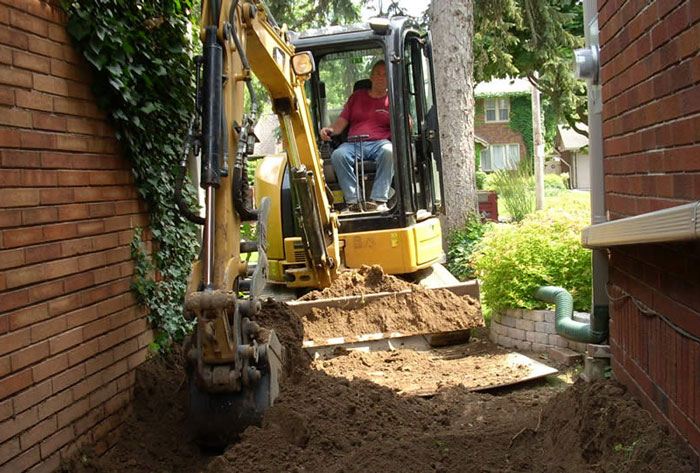
Catch basins and area drains. Where a low point cannot be lifted, a grated basin collects water and ties to a solid pipe that carries it to a daylit slope, a storm connection if permitted, or a dry well sized to the soil. These are common in tight side yards in Old South or behind garages where regrading would block access.
Downspout management. Redirecting or extending downspouts is the least glamorous step and often the most cost-effective. The City of London has long discouraged connecting roof leaders to sanitary sewers. That means downspouts should discharge to grade, preferably into a splash pad or leader that moves water to a swale or a drain inlet, not beside the foundation.
Weeping tiles. The term in London often refers to the foundation drainage system, either exterior or interior. Replacement of exterior weeping tiles usually happens in basement waterproofing jobs. In backyard drainage work, we more often tie surface systems to a sump pump that ultimately lowers the local water table around the foundation. Search patterns show a lot of interest in weeping tiles London Ontario because homeowners conflate backyard pooling with basement dampness. They are related but not identical problems. A good plan treats the surface first, then integrates with the weeping tile loop if needed.
Soil improvement and sod restoration. Once the water has a path, the surface needs to recover. On clay, blending a few centimetres of compost into the top layer improves rooting and reduces crusting. New sod knits faster with consistent moisture, which the improved drainage actually helps maintain evenly.
Typical timelines, season by season
London’s excavation season realistically runs from April into November. Winter work is possible, but frost doubles the effort and damages lawns. I advise clients to book assessments in early spring and aim construction between late May and early October, depending on the scope.
Small regrading and downspout work. One to two days on site, plus a week of light traffic restrictions to let the new grades and sod settle. That covers projects under 100 square metres with no hardscape demolition.
French drains for backyard drainage London Ontario. Two to four days for 15 to 30 metres of trench, including restoration. Add a day if we cross under a fence or build a shallow swale to feed the drain.
Catch basin with a short pipe run. One to two days, assuming no utility conflicts and a clear discharge point to daylight. If the outlet crosses a driveway or needs a curb cut, plan a week for coordination.
Combination project with regrading, a french drain, and a catch basin. Four to seven working days, weather dependent. Sod or seed establishment adds two to six weeks of aftercare for best results, though the yard is usable sooner.
Interior sump connection or exterior weeping tile tie-in. If a sump pit and pump already exist, tying a surface drain to the discharge can be done in a day. Adding a new sump system adds two to three days for interior work and cleanup.
Add a buffer of a week on the calendar for Ontario One Call locates, which contractors cannot skip. In busy spring windows, the locate process can stretch to 10 business days.
Budgets you can bank on
Costs vary with access, spoil handling, and how much restoration you want. The following ranges reflect real invoices in London in the past few years, inclusive of labour, materials, equipment, and typical restoration. Taxes are extra.
Regrading and swales. Four to eight dollars per square foot for open lawn areas, rising to ten to fourteen if we remove and relay interlock or build timber edging.
French drains London Ontario. Forty-five to eighty dollars per linear foot for a standard 300 millimetre wide trench at 450 to 600 millimetres deep with geotextile and clear stone, including sod restoration. Add ten to twenty per foot for tight access that requires mini skid steers and hand work, or where we haul spoil off site.
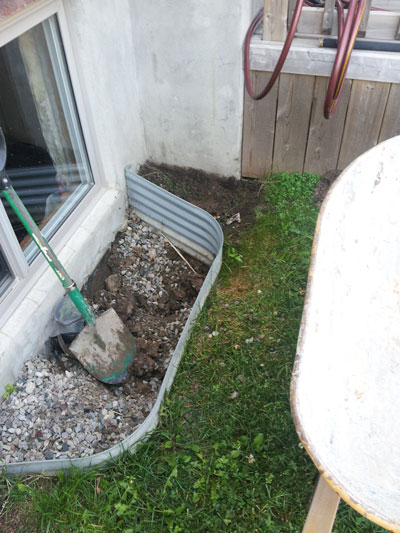
Catch basins and solid pipe to daylight. One thousand five hundred to three thousand five hundred dollars per basin with up to 30 feet of outlet. Longer outlets in heavy clay trend to fifty to one hundred dollars per additional foot, depending on depth.
Sump pump systems. Two thousand to five thousand dollars for a new interior sump pit, pump, check valve, and dedicated circuit, not counting battery backup systems. Tying an exterior drain into an existing sump discharge through a wye and valve is typically six hundred to twelve hundred dollars.
Exterior weeping tile replacement. When the job truly involves excavating to footing depth, expect one hundred twenty to two hundred fifty dollars per linear foot plus restoration, which often puts a full-wall project in the ten to twenty-five thousand dollar range. For many backyard drainage projects, that scope is unnecessary. A careful assessment separates nuisance pooling from foundation water management.
Softscape restoration. Fresh topsoil and sod across a typical suburban backyard often runs two to four thousand dollars, especially if we blend compost for better rooting. Seed is cheaper but risks patchiness on clay.
The spread in these numbers is not fluff. London lots vary wildly in access. If we cannot bring a small tracked machine through a side gate, two labourers will spend a day doing what a machine could do in an hour. That shows up on the invoice.
Three projects, three outcomes
Real results help more than theory. Here are three recent examples that mirror common London backyards.
Old North, 1920s two-storey, tight lot. The homeowner noticed pooling against a cedar hedge and a damp patch near the basement window well each April. The clay subgrade was high near the hedge, and a patio installed 15 years earlier held a shallow depression. We regraded 90 square metres at a 2 percent fall away from the house, installed a 24 metre french drain along the hedge line, and extended two downspouts to discharge into a shallow swale. Time on site was three days, plus a week of light watering for sod. The bill came to roughly seven thousand eight hundred dollars. The next spring, the client sent a photo of dry lawn after a 30 millimetre rainfall. Sump cycling dropped by half in heavy weather.
Byron split-level with walkout, moderate slope. The lower patio formed a bowl, trapping roof water and upslope runoff. The clients had priced a major retaining wall rethink, but the budget was not there. We cut a two percent swale across the upper yard to divert water around the house, set a catch basin in the lower patio corner, and ran a 12 metre solid pipe to daylight through a garden bed that already sloped to the side street. Two days of work, two thousand nine hundred fifty dollars all in, and the patio stayed dry. The wall stayed, and the homeowners gained two useable weeks in spring that had been too soggy before.
Stoney Creek new build, heavy clay, broad lawn. The yard looked flat but actually fell toward the home by 4 centimetres over 4 metres. After storms, water sat for days. We lifted the first three metres around the house with imported soil, set consistent slopes out to the fence, and built a 30 metre french drain along the fence low point with one catch basin that tied to the drain. Four days, including restoration. The cost was eleven thousand two hundred dollars. The sod took well. The owner installed a simple moisture sensor in the sump line and reported fewer long pump runs through late summer.
None of these needed a full weeping tile replacement. In two, careful grading did more than any pipe could have done alone. In the third, the french drain gave the new grades a reliable safety valve.
How contractors sequence the work
A seasoned crew treats the backyard like a small watershed. First, we mark the high points and low points with a laser or a simple transit, then flag the target swales and drain lines. Next, we cut and stack sod where it can be reused, then rough grade to shape the land. Only after the grades make sense do we trench for a french drain or set a basin. That order matters. A trench cannot fix a bad slope. Once the system ties together, we fine grade, replace or install sod, and set up light watering. A final walk with the homeowner confirms discharge points and care instructions.
This sequence also limits surprises. When you hear about a drain that never worked, often the installer cut a trench along a fence because it was easy, not because it was the right path. In London clay, drains need grade and a destination. That takes a measuring eye and patience more than fancy parts.
French drains vs. Weeping tiles: how they differ on the ground
Search terms like french drains London Ontario and weeping tiles London Ontario get thrown around interchangeably. They do different jobs.
A french drain in a yard manages surface and shallow subsurface water. It collects water from a swale, perforated pipe set in clean stone, wrapped in fabric so fines do not migrate. Typical depth is half a metre. We pitch it 1 percent if we can, 0.5 percent if we must, and we give it a real outlet.
Weeping tiles at the foundation sit at or below footing level. Their job is to relieve hydrostatic pressure at the wall and direct groundwater to a sump or storm drain. They are a basement system more than a yard system. Replacing them means digging to foundation depth around the home, which is major work. A backyard french drain should never connect into a sanitary sewer, and in many cases it should not connect directly to a weeping tile loop, unless that loop discharges to a sump designed to handle the extra flow. A competent contractor in London will walk you through these limits, because the city takes cross connections seriously.
What to ask drainage contractors in London Ontario
You will find plenty of drainage contractors London Ontario with glossy photos of gravel trenches. The right one for your yard will talk more about grades than gadgets. Credentials matter less than method and evidence. Look for contractors who measure slopes with a level or transit, call Ontario One Call without being prompted, and explain how their design discharges water legally.
A common red flag is a promise of a hidden miracle system with no outlet. Water needs a finish line. If you do not see how your french drain or catch basin reaches daylight, a storm connection, or a sump, keep asking. Another red flag is reluctance to disturb a small strip of lawn to gain proper slope. The least disruptive path is not always the functional one. A neat failure still fails.
Local rules and good-neighbour details
London’s engineering and bylaw context is friendly to backyard fixes when done responsibly. You generally do not need a building permit to regrade a yard or install a shallow drain, but two constraints apply. First, you cannot direct water onto a neighbour’s property in a way that causes damage or nuisance. Second, you cannot connect to a sanitary line, and storm connections, where available, may require approval.
Ontario One Call locates are mandatory for any digging, even if you think you know where lines run. Expect a week for completion and schedule around it. Downspout disconnections from sanitary lines are encouraged. Routing leaders to lawns or swales is the norm, and extensions or leader pipes across walkways are common in tighter lots.
Think about trees. Mature maples and spruces define many London yards. Trenching through feeder roots within a couple of metres of the trunk will stress a tree. Curve the drain or move the swale a metre outward to protect the root zone, even if it adds a few feet of pipe.
Design choices that stretch your dollar
You can make smarter material and layout decisions without losing performance.
Pipe and fabric. Use a smooth-wall perforated pipe with a sock or a non-woven geotextile wrap around the clear stone, not construction plastic or landscape fabric meant for flower beds. The goal is to stop fines from migrating, not to trap water above the drain. Perforations go down in most yard applications on clay to allow water to enter from below as the trench fills.
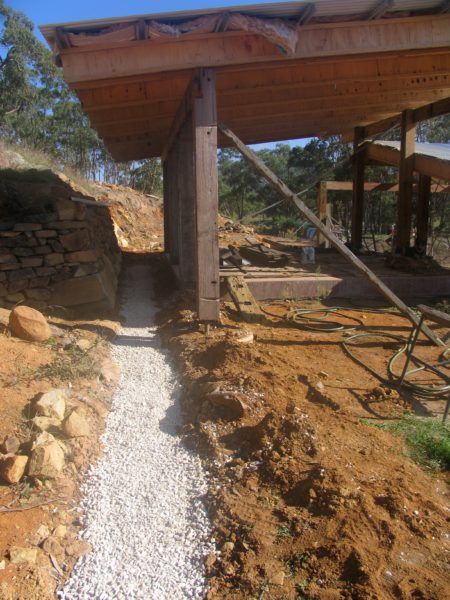
Stone size. In London clay, clear 3/4 inch stone is a reliable choice. Pea gravel compacts more and reduces void space. Larger stone is harder to grade and settle under turf.
Trench width. Wider trenches, 300 to 450 millimetres, are more forgiving to install and less likely to clog than narrow cuts. If access is easy, spend the extra stone for long-term stability.
Outlets. A pop-up emitter at the lawn edge is better than a simple cut pipe if you worry about kids or pets. In winter, a short above-grade discharge prevents freeze lock that can back up the line.
Restoration. Reusing lifted sod saves money and helps the yard look established faster. Blend a couple of centimetres of compost into the topsoil under new or reused sod to improve rooting on clay.
Common mistakes that cost more later
I see the same errors across London year after year. Drains run uphill for a few metres because the trench followed the fence, not the level. Catch basins set too high to intercept water, then shored up with decorative river rock that hides the flaw. Downspouts still dumping within a metre of the foundation because routing across a walkway felt inconvenient. Dry wells sized for sand installed in pure clay, which then act like bathtubs.
Another costly mistake is underestimating restoration. Heavy equipment on wet lawns means ruts that take months to settle. A careful crew uses plywood paths, waits a day after a heavy rain if possible, and restores with enough topsoil depth to buffer the clay.
How long results last
A well built french drain in London clay should last a decade or more. I have seen fifteen-year systems still clear when fabric and stone were used correctly. Regrading lasts until heavy roots or new hardscaping disturb it, which can be many years. Catch basins last as long as their grates are kept clear.
Maintenance is modest. Clear leaves and mulch from basin grates after storms. Keep pop-up emitters free of turf. In spring, walk the swales and feel for birdbaths that hold a few millimetres of water. A rake and a top up of soil can fix those. Check downspout extensions after a snow-heavy winter. That half hour each season pays back.
What you can do ahead of a site visit
A little prep makes the assessment sharper and the estimate tighter.
- Photograph the yard during or right after a heavy rain, and note how long puddles persist.
- Mark every downspout and where it currently discharges, even if it changes by season.
- Pull a fence panel if access is tight so the contractor can measure equipment width.
- Flag irrigation lines, landscape lighting, and invisible dog fences to reduce surprises.
- Ask for Ontario One Call locates early if you know you will approve the work.
Those simple steps cut guesswork. The photos and timing notes, in particular, help size the system to your actual storm events rather than a generic model.
A quick decision guide
- If water sits within two metres of the foundation after rain, start with regrading and downspout extensions before any pipe.
- If a low spot cannot be lifted due to stairs, decks, or lot lines, a catch basin tied to daylight is often the cleanest fix.
- If a fence line or hedge backs a neighbour’s higher yard, a french drain at the base can intercept lateral flow.
- If the sump runs heavily during dry spells, consider a foundation issue or a tie-in review, not just surface work.
- If access is limited and costs balloon, target the one or two worst flow paths first and reassess results.
Balancing budget, disruption, and performance
Most homeowners want the lawn back quickly and the problem gone for good. Those goals can align when the design is restrained and accurate. I rarely recommend lining a yard with drains. Two or three components, chosen well, do more than five thrown at the problem. Spend on grading and proper outlets first. Pipes and basins are tools, not solutions on their own.
Be wary of false economies. A shallow, fabric-less trench lined with river stone may look tidy for Instagram. In clay, it will clog. A slightly larger excavation with real fabric, clean stone, and a measured fall may raise the quote by a thousand dollars, yet it pays back every spring.
Scheduling matters. Aim to build after the ground firms up in late spring. Sod rooted in June handles summer storms better than seed suffering under an August sun. If a fall window is your only option, plan on a week of careful watering and keep traffic light.
The bottom line for London yards
Backyard drainage London Ontario works best when it treats causes, not symptoms. Look first at grade and where your roof water actually goes. Use french drains to intercept water along stubborn lines of flow, and place catch basins where a low cannot be lifted. Respect clay’s slow pace and give water a clear finish line that remains legal in all seasons. That mix delivers dry lawns, calmer sumps, and less frost damage to patios and walks.
If you call three drainage contractors London Ontario and hear three different plans, ask each to show the finished slope lines https://www.ashworthdrainage.ca/services/foundation-repair/ and the discharge points on a sketch. The plan that explains gravity best usually wins. And if you are still weighing whether you need weeping tiles or french drains, remember that one protects your foundation at depth while the other manages surface and shallow flow. Many homes benefit from both systems, but they earn their keep in different places.
With the right design, two to seven days of site time, and a budget that fits the scope, most London backyards can move from spongy and worrisome to reliable and low care. The proof will show itself the first time a summer cloudburst hits and your lawn stays walkable, your patio stays solid, and your sump sits quiet. That is a result worth planning toward.
Ashworth Drainage — Business Info (NAP)
Name: Ashworth DrainageAddress: 514 Hale St, London, ON N5W 1G8
Phone: (519) 660-9375
Website: https://www.ashworthdrainage.ca/
Email: [email protected]
Hours:
Monday: 9:00 AM – 5:00 PM
Tuesday: 9:00 AM – 5:00 PM
Wednesday: 9:00 AM – 5:00 PM
Thursday: 9:00 AM – 5:00 PM
Friday: 9:00 AM – 5:00 PM
Saturday: Closed
Sunday: Closed
Open-location code (Plus Code): XRR3+HV London, Ontario
Map/listing URL: https://maps.app.goo.gl/9kaoXAxRtJRP1ThS9
Embed iframe:
Socials (canonical https URLs):
Facebook: https://www.facebook.com/ashworthdrainage/
X: https://twitter.com/ashworthrules
Instagram: https://www.instagram.com/ashworthdrainage/
https://www.ashworthdrainage.ca/
Ashworth Drainage provides basement waterproofing and foundation repair services in London, Ontario and surrounding areas in Southwestern Ontario.
The company helps homeowners address wet basements, water intrusion, and drainage issues with solutions that fit the property’s conditions.
Service requests can include foundation repair, waterproofing options, sump pump and drainage-related work, and related assessments.
Ashworth Drainage is based at 514 Hale St, London, ON N5W 1G8.
To reach the team, call (519) 660-9375 or email [email protected].
Business hours are Monday to Friday 9:00 AM–5:00 PM, with the office closed Saturday and Sunday.
For directions and listing details, use the map listing: https://maps.app.goo.gl/9kaoXAxRtJRP1ThS9.
Popular Questions About Ashworth Drainage
What does basement waterproofing help prevent?Basement waterproofing is intended to reduce water intrusion and moisture problems that can lead to dampness, leaks, odors, and damage over time.
How do I know if I may need foundation repair?
Common signs can include visible cracks, water seepage, shifting or uneven areas, or recurring moisture problems; an on-site assessment is usually the best way to confirm causes and options.
What areas does Ashworth Drainage serve?
Ashworth Drainage serves London, Ontario and surrounding areas in Southwestern Ontario.
What are Ashworth Drainage’s hours?
Monday–Friday 9:00 AM–5:00 PM; Saturday closed; Sunday closed.
How can I contact Ashworth Drainage?
Phone: +1-519-660-9375
Email: [email protected]
Website: https://www.ashworthdrainage.ca/
Map: https://maps.app.goo.gl/9kaoXAxRtJRP1ThS9
Facebook: https://www.facebook.com/ashworthdrainage/
X: https://twitter.com/ashworthrules
Instagram: https://www.instagram.com/ashworthdrainage/
Landmarks Near London, ON
1) Kiwanis Park2) Western Fair District
3) Covent Garden Market
4) Victoria Park
5) Budweiser Gardens
6) Museum London
7) Fanshawe Conservation Area